
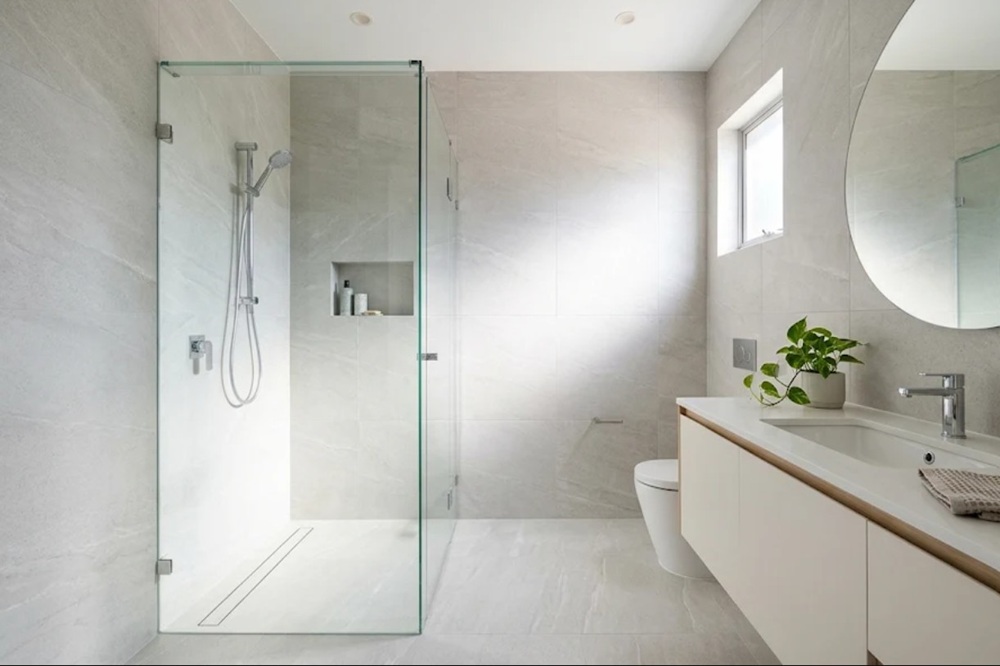
Frameless shower screens make a bathroom easier to clean, brighter and noticeably more modern, without the cost or disruption of a full renovation. Most installs take a single day, yet the change affects how the whole room reads. It’s one of the few upgrades that earns its keep whether you’re staying put for a decade or listing the house in spring.
Less Frame, Far Less Cleaning
The metal frame on an older screen is where the grime lives. Soap scum builds up along the bottom track, mould creeps into the corner seals, and a sliding door gets stiffer every year until somebody has to shoulder it open. You can scrub the glass all you like. The frame still looks tired.
Frameless shower screens remove most of that problem. The glass is held by hinges and brackets rather than a full surround, so there’s no channel for water to sit in and nothing for mould to grip. A squeegee after each shower and a quick wipe once a week keeps it close to new.
Small Bathrooms Look Bigger Behind Clear Glass
Without a frame, your eye runs straight from the doorway to the back wall of the shower. Tiles read as one continuous surface, light from a window or skylight travels further, and a compact ensuite feels a size larger than the tape measure says it is.
Plenty of Sydney apartments and older terraces are working with bathrooms barely wider than the vanity. In a room like that, losing a chunky aluminium frame is the difference between cramped and considered.
What Separates a Good Frameless Screen From a Cheap One
Not every frameless screen is built to the same standard, and the shortcuts usually show up a few years in. Before you agree to a quote, check:
- The glass. It should be toughened safety glass meeting AS/NZS 2208, the Australian Standard for glass in bathrooms and other human impact areas
- Thickness, since there’s no frame doing the structural work. 10mm is a common choice for panels that stand on their own
- Hinges, because steam finds the weak point in cheap hardware first
- How it’s fitted to your space
That last one is where off-the-shelf kits tend to fall down. Walls are rarely perfectly square, older homes least of all, and a screen measured on site for your actual recess sits flush and seals properly with no leaks. Top Glass Fencing, who install frameless shower screens in Sydney, measure every recess on site and use solid forged brass hinges and brackets, backed by a 10-year supplier warranty on the hinges. In a room that’s steamy twice a day, that kind of hardware matters more than most people expect.
Adding Value If You’re Planning to Sell
If a sale is on the horizon, the bathroom deserves more attention than its size suggests. Buyers scroll listing photos on their phones long before they book an inspection, and bathrooms get judged hard in those shots. A framed screen with a yellowed seal says “needs work”, and buyers rarely guess low when they price that work into an offer.
A full renovation before selling is a big call. Weeks of trades, a budget that tends to creep, and a house you can’t easily show while it’s happening. A new frameless shower screen is a far smaller job. Combine it with fresh silicone, regrouting where the old grout has stained and perhaps new tapware, and the room photographs as updated without a single tile coming off the wall.
If you’re doing it with a sale in mind:
- Book early. Frameless glass is made to size after the measure, so there’s a wait between quote and install, and you want it finished before the photographer arrives
- Match the hinge finish to your tapware. Mixed metals look half-done in photos
- Stick with clear glass, since heavy tints and patterns date quickly
- Ask your agent what buyers in your area comment on at inspections. Bathrooms come up more often than you’d think
Worth It Either Way
A shower screen is one of the few things in a house you use every single morning, which is probably why a bad one grates so much. If yours has a frame you’ve given up trying to get clean, book a free measure and quote with a local glazier and find out what a frameless replacement would take.