

Gas is a reliable and efficient energy source used in many homes for cooking, heating, and hot water. Because it operates quietly and out of sight, it’s easy to forget that gas systems require regular attention to remain safe. Unlike visible household issues, problems with gas lines can develop without obvious warning signs, making preventative care especially important for family wellbeing.
Many homeowners rely on a qualified gas plumber in Melbourne to inspect and maintain their gas systems, particularly as homes age or appliances are upgraded. Regular inspections help identify potential risks early, ensuring gas lines continue to operate safely and efficiently while protecting the people living in the home.
Understanding the Role of Gas Lines in the Home
Gas lines are responsible for delivering fuel safely from the main supply to appliances throughout the property. These lines are designed to be durable, but over time they can be affected by corrosion, ground movement, or general wear. Even small changes in pressure or alignment can impact performance.
Because gas lines are often hidden behind walls or underground, issues may not be immediately visible. Without regular inspections, minor faults can remain unnoticed and gradually increase the risk of leaks or system failure.
Why Gas Line Issues Are Often Missed
Unlike water leaks, gas problems don’t always leave obvious traces. A system may continue functioning while small faults develop in joints or connections. In many cases, homeowners only become aware of an issue when a smell, appliance malfunction, or safety concern arises.
Protecting Health and Indoor Safety
Gas leaks pose serious health risks if left unaddressed. Exposure to gas can cause symptoms such as headaches, dizziness, nausea, and breathing difficulties. In enclosed spaces, even low-level leaks can become dangerous over time.
Routine inspections help ensure gas is being delivered safely and appliances are operating correctly. This proactive approach reduces the risk of harmful exposure and supports a healthier indoor environment for families.
Preventing Fire and Explosion Risks
One of the most serious risks associated with faulty gas lines is the potential for fire or explosion. Gas is highly flammable, and leaks combined with ignition sources can create dangerous situations.
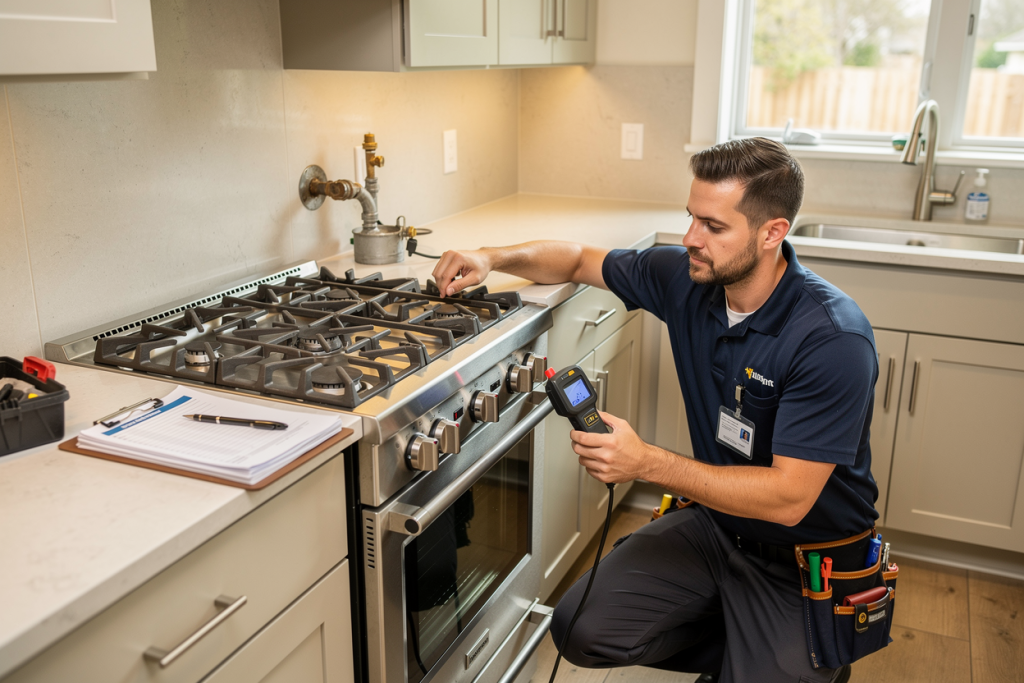
Regular inspections reduce this risk by identifying compromised lines, loose fittings, or outdated components. Addressing these issues early helps prevent emergencies and provides peace of mind that the home’s gas system is operating as intended.
Supporting Appliance Performance and Efficiency
Gas appliances rely on consistent pressure and safe delivery to function efficiently. Faulty gas lines can affect performance, leading to uneven heating, pilot light issues, or increased energy use. Inspections help ensure appliances receive the correct gas flow, supporting reliable operation and energy efficiency. Well-maintained systems often perform better and experience fewer breakdowns, extending the lifespan of household appliances.
When Inspections Are Especially Important
Certain situations make gas line inspections particularly important. Older homes, recent renovations, appliance upgrades, or changes in gas usage can all impact system safety. Seasonal changes, such as increased heater use in winter, can also place additional demand on gas lines. So scheduling inspections during these times helps ensure the system remains safe under changing conditions and reduces the likelihood of unexpected issues.
Making Safety a Regular Priority
Gas safety is not a one-time consideration, but an ongoing responsibility. Regular inspections provide reassurance that gas lines are secure, appliances are functioning correctly, and risks are being managed proactively.
By prioritising routine checks and professional assessments, homeowners can protect their families from hidden dangers and maintain a safe, comfortable living environment. Investing in preventative care today helps avoid serious problems tomorrow and supports long-term household safety.